PEMF Therapy Research: What the Evidence Actually Shows

Interest in pulsed electromagnetic field therapy has grown alongside an expanding body of published research. Much of the discussion online, however, blends laboratory findings, clinical exploration, and marketing claims without clearly separating evidence levels.
This article reviews PEMF therapy research in a conservative, evidence-aligned way. Rather than promising outcomes, it explains what different types of studies actually show, how researchers interpret those findings, and where meaningful limitations remain.
How PEMF Therapy Research Is Typically Conducted
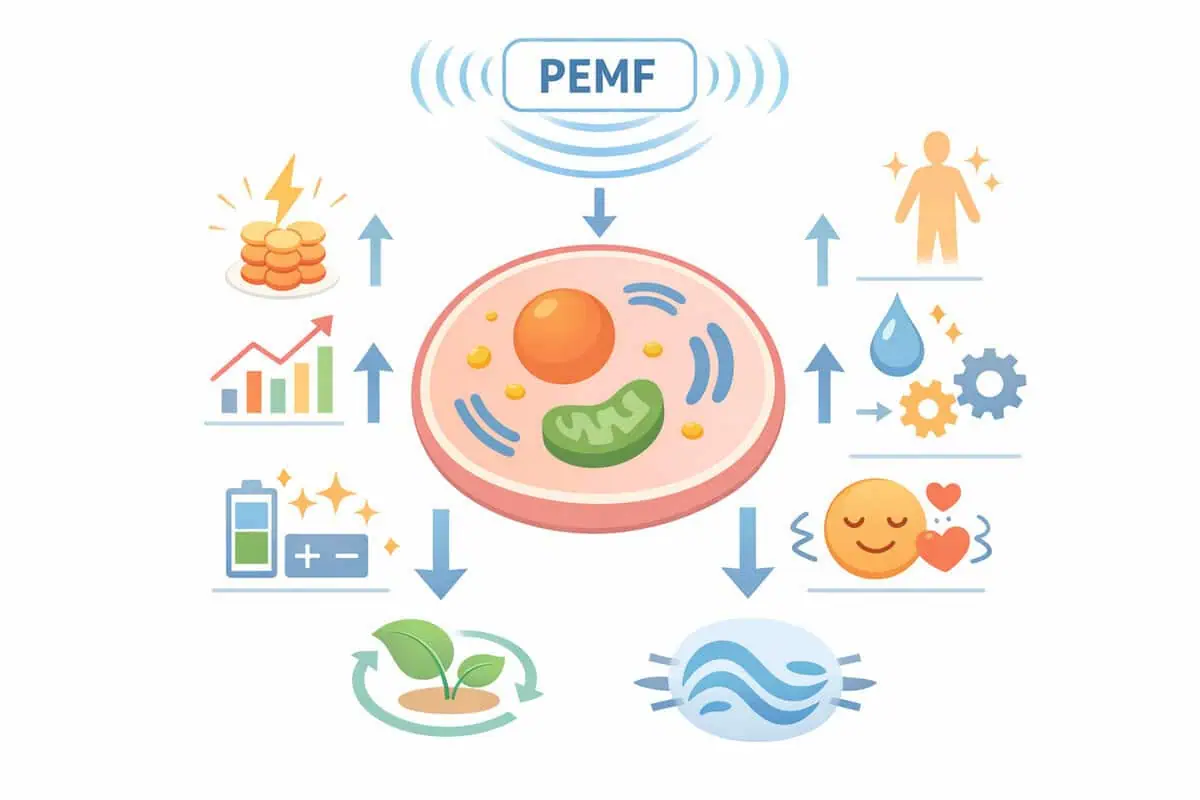
PEMF research spans several study types, each designed to answer different questions. Understanding these categories helps explain why results are often described cautiously.
- In vitro studies: Laboratory experiments examining cellular responses to electromagnetic signals.
- Animal studies: Controlled models exploring physiological pathways under standardized conditions.
- Human observational studies: Evaluations of reported outcomes during routine use.
- Clinical trials: Structured investigations with defined protocols and outcome measures.
Each study type contributes partial insight. None, on its own, establishes universal conclusions for everyday use.
In practice, many PEMF publications combine findings across these categories to build a broader explanatory framework. Laboratory studies often generate hypotheses about cellular signaling or ion movement, while animal and human research explore whether those mechanisms appear relevant in living systems.
This layered approach is common in non-pharmaceutical research, where direct cause-and-effect conclusions are difficult to establish. As a result, authors frequently emphasize patterns, associations, and consistency across study designs rather than definitive outcomes.
Study protocols also vary widely in how electromagnetic exposure is defined. Variables such as waveform shape, duty cycle, exposure duration, and field strength can differ substantially from one investigation to another.
Because of this variability, research conclusions are typically framed within the narrow conditions tested. Authors routinely caution that findings observed under laboratory constraints may not generalize beyond those parameters.
Another common feature of PEMF research design is the emphasis on signal characterization. Studies frequently report frequency ranges, waveform types, and exposure duration in detail, as these parameters strongly influence biological interaction. When these variables are not clearly defined, results are harder to interpret or replicate.
This focus on signal specificity reflects a broader principle in bioelectromagnetic research: biological systems tend to respond within constrained parameter windows. As a result, outcomes observed under one protocol should not be assumed to apply broadly across different devices or usage patterns.
Common Outcomes Examined in PEMF Studies

Rather than focusing on symptoms, many studies measure biological signals associated with normal physiological function.
- Ion exchange across cell membranes
- Microcirculatory blood flow markers
- Cellular energy signaling pathways
- Neuromuscular relaxation indicators
These markers help researchers explore mechanisms, not guarantees of personal results.
Researchers often select these outcomes because they can be quantified under controlled conditions. Changes in electrical gradients, cellular signaling molecules, or blood flow proxies allow investigators to compare baseline measurements with post-exposure observations.
Importantly, these measurements do not equate to clinical benefits. Instead, they provide insight into whether electromagnetic fields interact with biological systems in measurable ways, forming a foundation for further investigation rather than conclusions about effectiveness.
Outcome selection also reflects an effort to avoid subjective interpretation. Objective markers reduce reliance on perception-based reporting and help standardize comparisons across studies.
Even when statistically significant changes are observed, authors frequently note that biological relevance must be interpreted carefully and in context.
Researchers also distinguish between immediate responses and longer-term patterns. Some studies examine changes that occur during or immediately after a session, while others track markers across repeated exposures. These approaches address different research questions and should not be conflated.
Short-term shifts may indicate acute physiological responsiveness, whereas repeated-measure designs explore whether those responses stabilize, diminish, or vary over time. Most authors stress that neither approach, on its own, establishes long-term outcomes.
Cellular and Molecular Research Insights
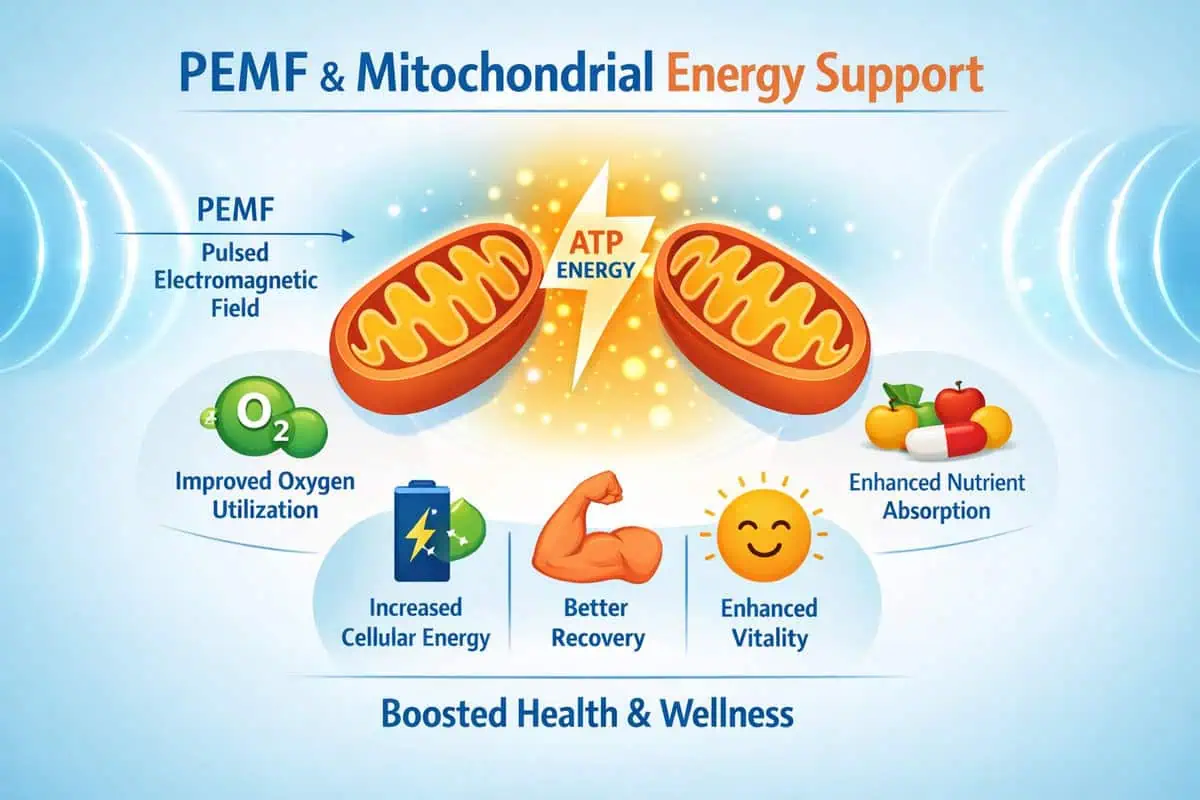
Laboratory research frequently examines how low-frequency electromagnetic fields interact with cellular environments. Some studies suggest changes in signaling pathways related to energy metabolism and cellular communication.
According to summaries available through PubMed-indexed research, these interactions are subtle and highly dependent on frequency, intensity, and exposure duration.
At the cellular level, PEMF exposure is often discussed in relation to ion channel behavior, membrane potential stability, and intracellular signaling cascades. These processes are foundational to normal cell communication and energy regulation.
Researchers consistently caution that observed cellular responses do not imply therapeutic outcomes. Instead, they are framed as indicators that electromagnetic signals may influence biological systems under specific, tightly controlled conditions.
Many publications emphasize that cellular responsiveness appears non-linear. Small changes in exposure parameters may alter observed effects, reinforcing the importance of protocol specificity.
This sensitivity helps explain why cellular findings are treated as mechanistic insights rather than predictive tools for real-world use.
Many mechanistic studies also highlight that cellular responses are context-dependent. Factors such as baseline cellular state, surrounding tissue environment, and concurrent physiological processes can influence how electromagnetic signals are received and processed.
Because these variables are difficult to standardize outside laboratory settings, authors consistently caution against extrapolating cellular findings directly to consumer use scenarios.
Microcirculation and Tissue Environment Studies

Some PEMF research explores localized circulation markers, examining how electromagnetic fields may influence blood flow dynamics at the microvascular level.
Institutions such as the National Institutes of Health note that circulation-related findings vary widely depending on study design and population.
Microcirculation studies typically focus on small blood vessels and capillary networks rather than large-scale cardiovascular outcomes. Measurements may include tissue oxygenation, perfusion indicators, or temperature changes.
These findings are generally interpreted as exploratory. Researchers emphasize that improved microenvironment markers do not necessarily translate to functional or experiential outcomes for individuals.
Authors often highlight that circulation-related metrics are highly sensitive to posture, ambient temperature, and measurement technique, which further complicates interpretation.
Because of these sensitivities, many studies include environmental controls such as fixed room temperature, standardized positioning, and acclimation periods before measurement. These controls improve internal consistency but further limit how directly findings translate to everyday settings.
PEMF Research Related to the Nervous System

Research involving the nervous system often evaluates relaxation responses and neuromodulatory signals rather than neurological treatment outcomes.
Clinical overviews from sources like the Cleveland Clinic emphasize that such findings are exploratory and not diagnostic.
Studies in this area may examine autonomic balance markers, electrical activity patterns, or subjective relaxation reports. These metrics help researchers explore how electromagnetic exposure interacts with neural signaling pathways.
Importantly, nervous system research in PEMF contexts avoids claims related to disease modification or neurological treatment. The emphasis remains on understanding signaling behavior within normal physiological ranges.
Researchers also note that nervous system outcomes are particularly susceptible to contextual factors such as environment, session conditions, and participant expectations.
What Human Studies Typically Report

Human-focused studies often rely on participant-reported experiences alongside physiological markers. Common themes include comfort during sessions and perceived relaxation.
These reports help researchers understand usability and tolerability, not guaranteed outcomes.
Observational data may also document session duration, frequency, and device placement patterns. This information is useful for understanding how PEMF systems are used outside laboratory environments.
Researchers consistently note that self-reported outcomes are influenced by expectation, environment, and individual variability, reinforcing the need for cautious interpretation.
As a result, observational findings are typically framed as descriptive rather than confirmatory.
For this reason, many authors recommend interpreting human observational data alongside mechanistic and controlled studies, rather than in isolation. This triangulated approach helps contextualize subjective reports within broader physiological research.
Why PEMF Study Results Can Appear Inconsistent

Differences in devices, protocols, and measurement tools make direct comparisons difficult. Frequency ranges, session length, and participant characteristics all influence findings.
This variability explains why systematic reviews often conclude that evidence is suggestive rather than definitive.
Inconsistent terminology across studies further complicates interpretation. Terms such as intensity, waveform, and exposure duration may be defined differently depending on the research context.
For readers, this reinforces the importance of reviewing study definitions carefully before comparing results or drawing broader conclusions from individual papers.
Safety Considerations in PEMF Research

Most published research emphasizes low-intensity, non-invasive exposure parameters. Safety discussions typically focus on appropriate use and contraindicated populations.
For a broader overview, see the PEMF therapy safety overview.
Research boundaries are clearly defined in most publications. Authors routinely exclude certain populations and stress adherence to manufacturer guidelines when devices are used outside research settings.
Long-term considerations, such as consistent use and device maintenance, are generally discussed as practical factors rather than research outcomes.
This distinction reinforces that safety research aims to establish appropriate boundaries, not to promote expanded or intensified use.
From a practical standpoint, this means that research-informed use emphasizes moderation, consistency, and adherence to published safety guidance. Escalating intensity or frequency beyond studied ranges is generally discouraged in the literature.
What PEMF Research Does Not Claim

Responsible research does not position PEMF as a cure or medical treatment. Most authors explicitly caution against overstating findings beyond measured parameters.
This conservative framing aligns with summaries from organizations like the Mayo Clinic.
Using Research to Make Informed Decisions

Research helps set realistic expectations and clarifies what PEMF may support within normal physiological processes.
For broader context, readers often explore the science-backed PEMF therapy benefits overview.
Where to Go Next in PEMF Research

Those interested in deeper exploration often review multiple study types rather than relying on isolated findings.
Additional educational articles are available in the PEMF Sage blog, which organizes research topics by mechanism and use context.
Summary: What the Evidence Actually Shows
PEMF therapy research offers insight into how low-frequency electromagnetic fields interact with biological systems, particularly at the cellular and signaling level. The evidence remains exploratory, nuanced, and context-dependent.
For readers considering device categories or comparing systems, the next logical step is reviewing the Best PEMF Devices & Mats (2026 Buyer’s Guide) for a structured, evidence-aligned overview.