
Understanding the Potential Benefits of PEMF Therapy
Pulsed electromagnetic field (PEMF) therapy is increasingly explored as a non-invasive wellness modality that supports normal physiological processes. Rather than acting as a treatment or cure, PEMF therapy is generally discussed in terms of how low-level electromagnetic signals may interact with the body’s existing biological systems.
This page provides a conservative, evidence-aligned overview of commonly discussed PEMF therapy benefits, grounded in published research and institutional sources. The goal is to explain what PEMF may support, how those effects are theorized to occur, and where scientific limits still exist.
In practical terms, PEMF is typically delivered through mats, pads, or applicators that generate pulsed electromagnetic signals on a schedule (often in short sessions). The “benefits” conversation usually centers on whether those signals can nudge normal biological processes that already rely on electrical and electrochemical activity—such as membrane potentials, ion transport, and signaling cascades—without implying any disease-specific effects.
Because PEMF devices vary widely in design (waveform, frequency, intensity, coil layout, and duty cycle), the evidence base is not always directly comparable across studies. A conservative way to read the literature is to focus on broad physiological mechanisms that plausibly apply across device categories, while staying cautious about strong outcome claims that depend on specific protocols or specialized clinical contexts.
Cellular Signaling and Communication Support
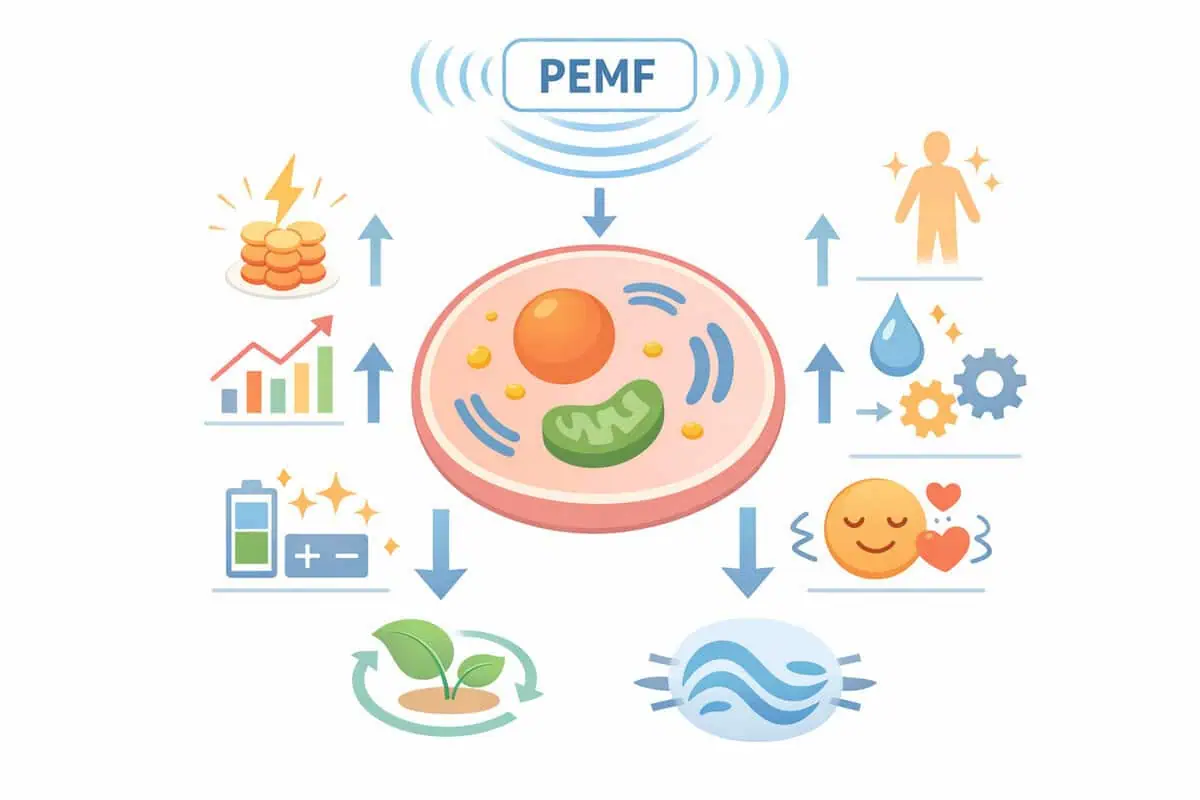
One of the most frequently cited areas of PEMF research involves cellular signaling. Cells rely on electrical and electrochemical gradients to communicate, transport ions, and regulate internal balance.
- PEMF signals are studied for their interaction with cell membrane potential
- Research explores effects on ion channel activity and signal transduction
- These processes are foundational to normal cellular communication
Laboratory and clinical research indexed by PubMed describes PEMF exposure as a potential modulator of how cells respond to their environment, without replacing or overriding natural biological function.
A useful way to frame this conservatively is to remember that cells maintain resting membrane potentials and constantly adjust ion concentrations (such as sodium, potassium, calcium, and chloride) to support normal function. Research interest often focuses on whether pulsed electromagnetic signals can influence these electrical conditions indirectly, potentially affecting how cells “interpret” external cues and regulate downstream processes.
Importantly, “cellular signaling” in PEMF discussions is not a single pathway. It is a broad label that may include changes in ion channel gating behavior, second-messenger activity, gene expression patterns, and enzyme signaling. Because these are complex systems with many confounding variables, a restrained interpretation emphasizes mechanism plausibility rather than guaranteed results.
Circulation and Microcirculation Pathways

Healthy circulation is essential for delivering oxygen and nutrients throughout the body. Some PEMF studies examine how electromagnetic fields may influence microcirculation at the capillary level.
According to summaries from institutions such as the National Institutes of Health, PEMF research in this area focuses on:
- Blood flow dynamics in small vessels
- Endothelial signaling behavior
- Oxygen exchange efficiency
These findings are discussed as supportive mechanisms rather than direct cardiovascular outcomes.
Microcirculation refers to blood flow through the smallest vessels—arterioles, capillaries, and venules—where oxygen delivery and waste exchange occur. Research interest here is often about subtle changes in local perfusion and vascular signaling, which can be difficult to measure consistently across different study designs and populations.
A conservative reading emphasizes that microcirculation is influenced by many factors, including hydration status, temperature, movement, autonomic tone, and baseline vascular health. PEMF studies that report circulatory markers may be capturing a context-dependent response rather than a uniform effect that applies to all users.
Mitochondrial Energy and Metabolic Support
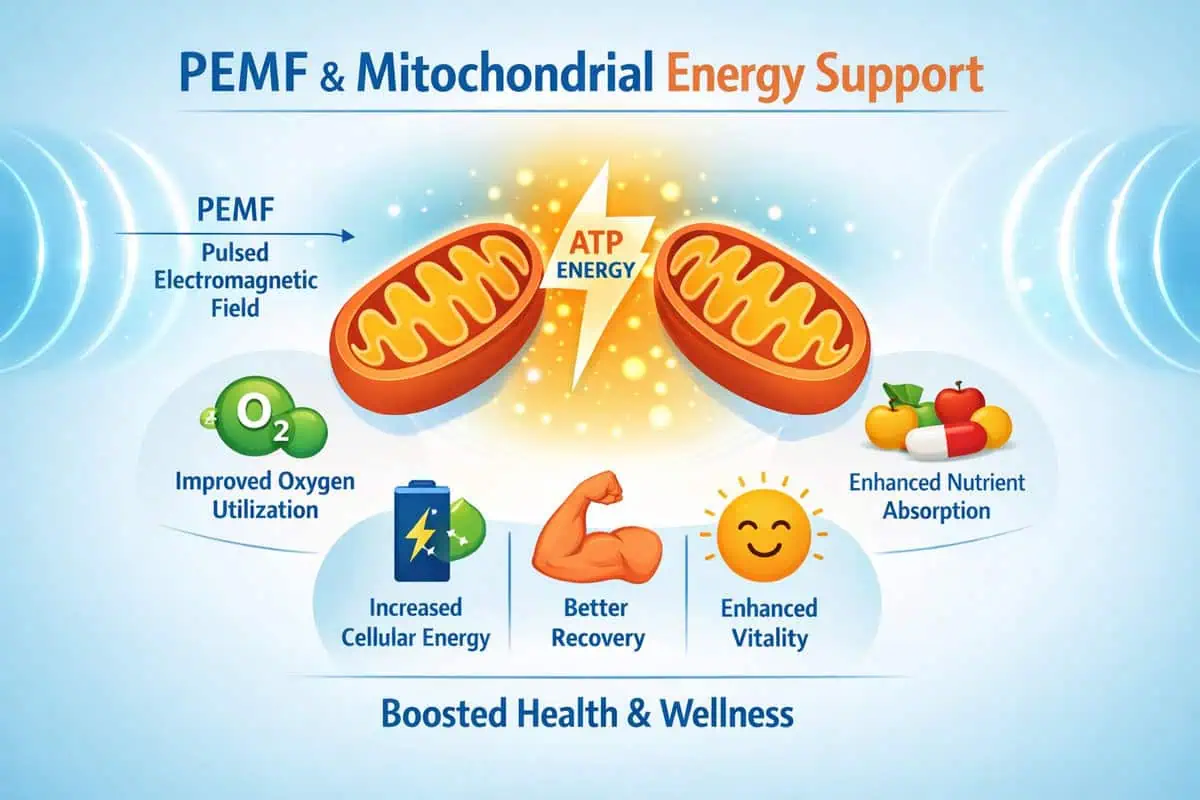
Mitochondria are responsible for producing adenosine triphosphate (ATP), the molecule that powers cellular activity. PEMF therapy research frequently explores whether electromagnetic signals may influence mitochondrial efficiency.
Peer-reviewed literature discusses potential relationships between PEMF exposure and:
- ATP synthesis pathways
- Oxidative balance
- Cellular energy signaling
Organizations such as the Mayo Clinic emphasize that energy-related findings should be interpreted cautiously and within the broader context of overall metabolic health.
From a physiology standpoint, mitochondrial output is closely tied to oxygen availability, nutrient status, movement, sleep, and stress physiology. As a result, any discussion of “energy” in the PEMF context should be handled carefully: research may explore biochemical markers or cellular efficiency signals, but that does not automatically translate into a predictable subjective energy change for every individual.
In the research literature, mitochondrial discussions often overlap with oxidative balance. Cells continuously manage reactive oxygen species as part of normal metabolism, and the body has built-in antioxidant systems. Some PEMF work examines whether signaling changes influence these balancing systems, but this remains an area where strong claims should be avoided unless supported by consistent, well-controlled evidence.
A conservative approach is to view mitochondrial findings as potentially supportive of normal cellular energy processes under certain conditions, while recognizing that lifestyle foundations (sleep, nutrition, activity, and recovery) remain primary drivers of metabolic function. PEMF—when used—should be seen as complementary rather than foundational.
Nervous System Regulation and Balance

Another commonly discussed area of PEMF therapy involves the nervous system. Nerve cells communicate electrically, making them a subject of interest in electromagnetic research.
Studies referenced by the Cleveland Clinic describe PEMF signals as being investigated for their potential influence on:
- Autonomic nervous system balance
- Stress-response signaling pathways
- Relaxation-associated neural activity
Importantly, these discussions remain focused on regulation and support, not neurological treatment.
The autonomic nervous system includes sympathetic and parasympathetic activity, which influences heart rate variability, breathing patterns, digestion, and recovery signaling. In PEMF research discussions, “regulation” often refers to whether an intervention can help shift the body toward a calmer baseline state in appropriate contexts, without implying a therapeutic effect on clinical conditions.
If you are exploring PEMF for nervous system balance, it is generally reasonable to prioritize gentle protocols, consistent timing, and comfort-focused settings rather than intensity. This aligns with the broader evidence framing that emphasizes signaling and regulation over strong outcome claims.
Musculoskeletal Comfort and Recovery Context

PEMF therapy is often explored in the context of musculoskeletal wellness, particularly among individuals interested in recovery routines and mobility maintenance.
Research in this area examines:
- Cellular responses in muscle tissue
- Circulatory support following physical activity
- Comfort-related outcomes reported in observational studies
These findings are typically framed as complementary to rest, movement, and other foundational recovery practices.
From an ownership perspective, musculoskeletal use cases are one reason mats and full-body systems are popular: they make it easier to maintain consistent routines without needing precise applicator placement. Still, “more coverage” is not automatically “better,” since comfort, session adherence, and appropriate settings often matter more than maximum exposure.
A conservative approach is to think of PEMF for recovery as potentially supporting normal post-activity routines—similar to how hydration, sleep, nutrition, and gentle movement support recovery. If a device is used, it should fit easily into realistic weekly patterns rather than requiring complex protocols that are hard to maintain.
Sleep, Stress, and Daily Wellness Routines

Some individuals incorporate PEMF therapy into evening or relaxation-focused routines. Research discussions in this area center on nervous system signaling and relaxation states rather than sleep treatment.
Published summaries note interest in:
- Parasympathetic nervous system activation
- Routine-based relaxation cues
- Consistency of use rather than intensity
As with other benefits, institutions stress that PEMF should not replace established sleep hygiene or stress management practices.
In practice, consistency tends to be the most realistic variable users can control. A calm pre-bed routine—dim lights, reduced stimulation, comfortable positioning—often overlaps with how PEMF is used in home settings. This makes it useful to view PEMF as a potential “routine anchor” rather than a primary driver of sleep outcomes.
How to Interpret PEMF Benefits Conservatively
Across all benefit categories, a consistent theme emerges: PEMF therapy is studied as a supportive modality, not a standalone solution. The strongest evidence focuses on biological mechanisms rather than guaranteed outcomes.
When evaluating PEMF-related benefit claims, it is important to:
- Differentiate mechanisms from results
- Rely on peer-reviewed and institutional sources
- Consider individual context and safety guidance
For readers interested in a structured overview of devices designed around these principles, you may explore our Best PEMF Devices & Mats (2026 Buyer’s Guide).
A practical “evidence filter” is to ask whether a claim is supported by outcomes in humans, whether the protocol is clearly documented, and whether the magnitude of effect is described realistically. Mechanism-based claims can be educational, but they should not be treated as promises of how an individual will feel or function.
It is also worth separating three common categories of PEMF content you may encounter online:
- Mechanism explanations (how PEMF might interact with biological signaling)
- Device feature descriptions (frequency ranges, coil patterns, session modes)
- Outcome claims (what someone says will happen)
Conservative interpretation prioritizes the first two categories and treats the third with caution unless it is supported by strong evidence and aligned with institutional guidance.
Next Steps for Learning About PEMF Therapy
Understanding PEMF therapy benefits begins with physiology, evidence quality, and realistic expectations. This benefits overview serves as a foundation for deeper exploration into specific use cases, safety considerations, and device types.
You may also find the following resources helpful:
For questions about our research standards or content methodology, please visit our Contact PEMF Sage page.
If you are deciding whether PEMF is a fit for your household, it can help to think in terms of practicality: how often you would realistically use a device, where it would be stored, whether multiple household members might share it, and whether the session format matches your routines. These considerations often matter as much as technical specifications when it comes to long-term consistency.
To explore device categories and selection logic in a structured way, the Buyer’s Guide is designed to help you compare common formats (mats, pads, and full-body systems), understand what specifications typically mean, and align choices with conservative safety guidance. For ongoing education, the blog provides shorter topic-specific articles that expand on mechanisms, session patterns, and evidence quality.